
Pathways to Innovation
Collaboration in action: evidence-based guidance for an innovative technology
Artificial intelligence (AI) is one of the most innovative technologies of our time, continuously growing and influencing how we live our lives and do our work.
The full scope of AI’s impact on health care continues to grow as research into its accuracy, reliability and safety in clinical practice progresses. As a medical regulator in Alberta, it is CPSA’s responsibility to ensure we’re keeping up with the evolution of AI, especially as it applies to patients and medical practice.
Understanding our advice documents
CPSA’s Standards of Practice outline the minimum standards of professionalism and ethics expected from physicians and physician assistants practising in Alberta.
Advice to the Profession documents provide additional information and guidance, to ensure physicians and physician assistants fully understand how to meet the expectations outlined in our standards.
Advice to Albertan documents outline what patients should expect when accessing care in Alberta, providing information to support patient safety.
Advice documents are regularly reviewed to ensure they remain clear, up-to-date and grounded in the latest evidence.
In 2025, team members from across CPSA came together to begin revamping our resources on AI. Collaboration is one of CPSA’s core characteristics, providing important opportunities to share knowledge and insights, and bringing significant benefits and improvements to our work.
Guiding medical practice
CPSA had an Advice to the Profession document on AI, but it needed to be updated to ensure physicians and physician assistants have accurate, reliable, evidence-based guidance.
The combined expertise of CPSA’s Analytics, Innovation & Research (AIR) and Standards of Practice teams contributed to the updated advice document, informed by:
Did you know?
CPSA published its first advice to the profession document on AI—titled Artificial Intelligence in Generated Patient Content—in 2023.
Environmental scans
Academic literature
Regulatory commentary
Privacy guidance
“AI in health care is an area where physicians want more support,” says Dr. Cliff Lindeman, a Senior Manager with the AIR team. “Updating the advice document was an opportunity to integrate emerging evidence directly into CPSA’s guidance. Our advice on AI will need to be reviewed and updated regularly to continue providing this support.
“One important shift was broadening the lens beyond AI-generated charting. Research makes it clear that AI also affects diagnostics, equity, workflow integration and system performance. This led us to frame our advice around quality of care and harm mitigation, rather than specific tools.”
Key updates to the revised Advice to the Profession include:
Encouraging a balanced approach to AI use in clinical practice, while minimizing potential harm.
Emphasizing that while AI can support clinical care and documentation, it is currently unregulated in Canada, and physicians and physician assistants are fully accountable for all clinical decisions and patient record content.
Reinforcing that AI use must align with privacy legislation and CPSA’s Standards of Practice.
Shaping the patient experience
When Albertans visit their physicians or physician assistants they expect high-quality care, supported by current and informed health data, that is rooted in patient safety. In support of this, the collaboration between AIR and the Standards of Practice teams also led to the creation of a new resource: an Advice to Albertans document on AI.
“The Advice to Albertans will help patients understand AI’s role in health care,” says Chantelle Dick, Manager, Standards of Practice. “This resource outlines what patients should expect from health providers who use AI in their practice, and explains their rights when it comes to consenting to the use of AI as part of their care.”
Together, the AIR and Standards of Practice teams brought unique but complementary perspectives and expertise to this collaboration, creating resources that support safe, transparent and evidence-informed patient care.
It is through collaboration, innovation and evidence-based approaches that CPSA continues to support physicians and physician assistants, inform patients, and strengthen the quality and safety of care across Alberta.
Supporting our approach to innovation
CPSA’s ongoing commitment to innovation is reflected in the work of our Research & Evaluation Unit (REVU). Part of the AIR team, REVU brings an evidence-based lens to our work, and helps position CPSA as a leader in the emerging field of medical regulation research.
REVU often publishes their findings in peer-reviewed journals, shaping conversations that directly connect physician performance, patient experience and system-level improvement. Here are a few of REVU’s publications from 2025:
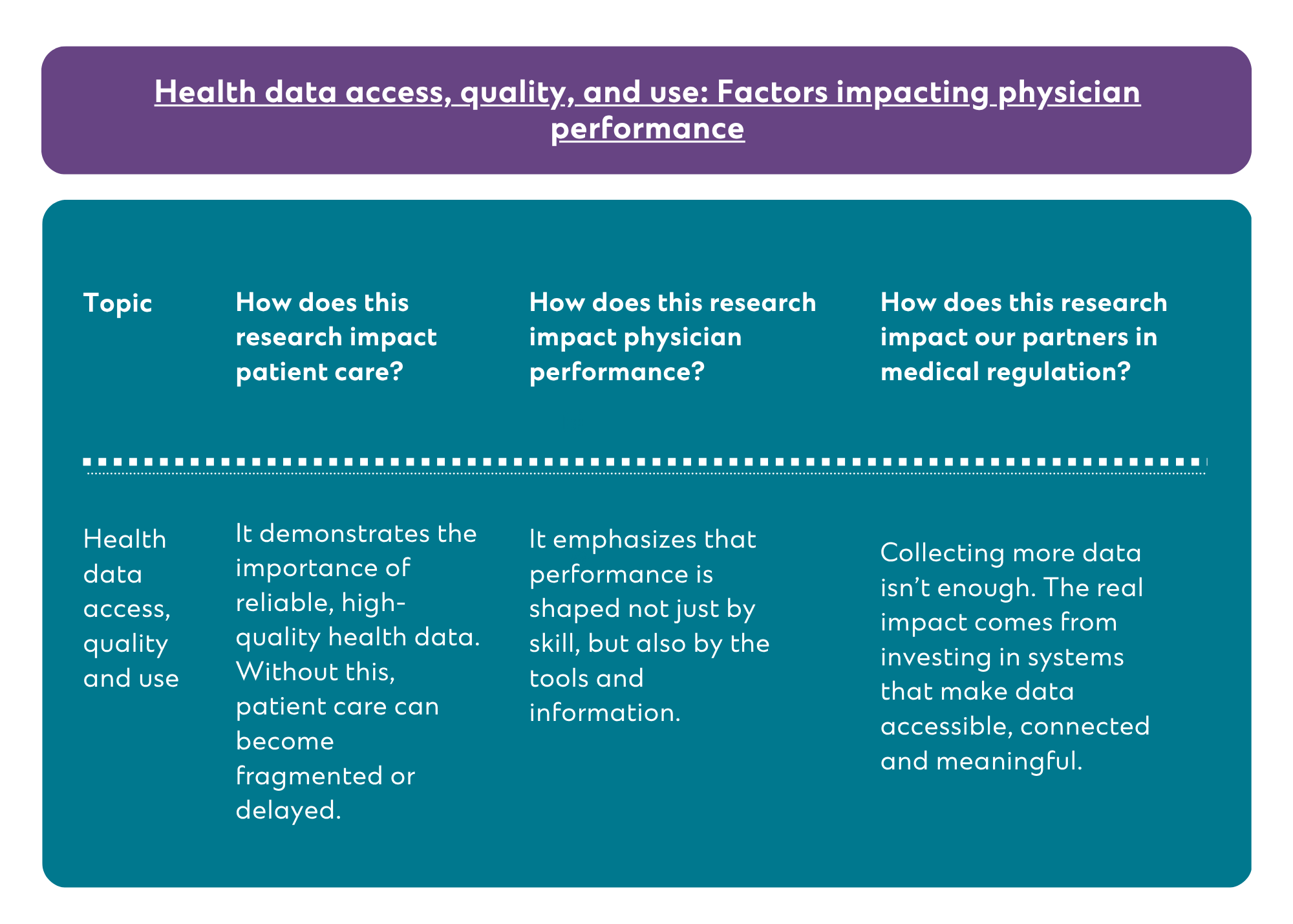
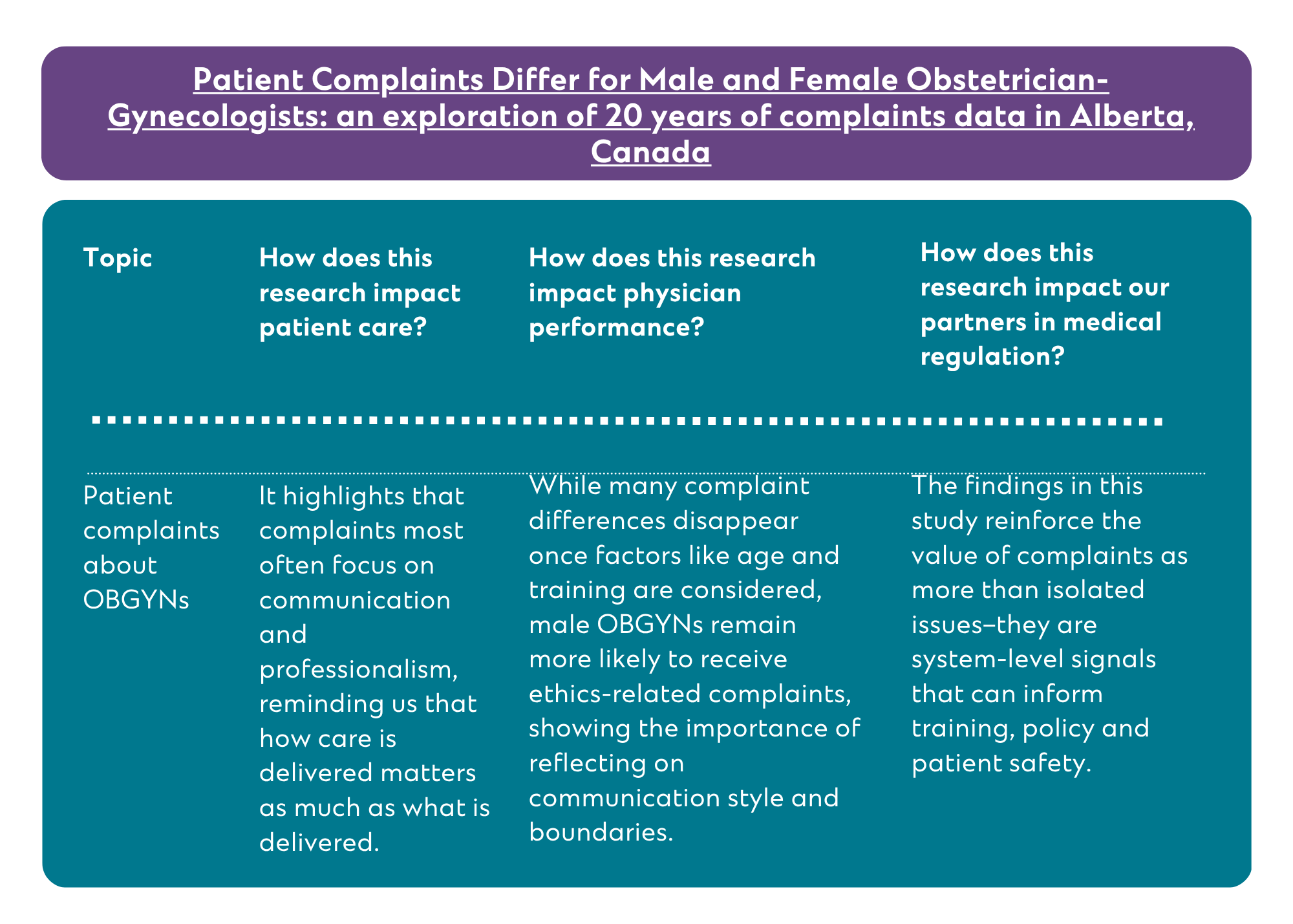
Find out more about REVU on CPSA’s website.
